Why Free Trials Are Killing Your Business
Playing With Someone Else's Money
I learned this lesson in a pool hall, not a dojo.
When you play pool with your own money, you play careful.
You line up your shots. You think three balls ahead. You do not take the low-percentage bank shot unless you have no other choice.
Every dollar on the table is yours, and you feel each one when it disappears.
When you play with someone else's money, you play different.
You take shots you have no business taking. You go for the hero runout instead of the smart safety. You play like the dollars are unlimited because, for you, they are.
That is what a free trial does to your gym.
You invite someone in with no skin in the game. They did not pay to be there. They did not commit to anything. They are playing with your money. And they play like it.
Most gym owners do not see it this way.
They think the free trial is a harmless on-ramp. A friendly handshake. A no-pressure way to get people through the door.
What they do not see is everything the free trial costs them, long after the trial is over.
What the Free Trial Actually Costs You
Let us start with the obvious cost.
Your time and your instructors' time.
Every free trial student walks into a class and takes attention away from your paying students. The instructor slows down to explain basics.
A paying student gets paired with the trial student and spends the round babysitting instead of training.
The energy in the room shifts. Instead of a room full of committed people working on their craft, you have a room with a tourist in it.
One tourist is not a big deal. Ten tourists a month is.
Multiply that across a year and you have spent hundreds of hours accommodating people who never paid you a dollar.
But the time cost is just the start.
The real cost is who you attract.
A free trial is a magnet. The question is what it attracts.
It attracts tire-kickers. People who are curious but not committed. They saw a YouTube highlight and thought, "That looks cool."
They will try your free class, then try the CrossFit gym's free class, then try the yoga studio's free class. You are a stop on their tour.
It attracts comparison shoppers. People who are gathering data, not making a decision.
They want to know what each gym offers before they commit to nothing. They will take your free week, ask a dozen questions, and you will never see them again.
It attracts the low-hanging fruit. The people who sign up because it was easy and quit because it was easy. Easy to join, easy to quit.
When you lead with free, you build a funnel full of people who were never going to stay.
And here is the part nobody talks about. Your free trial students cannot evaluate what you are selling.
A beginner walking into their first martial arts class has no frame of reference.
They do not know what a good roundhouse kick looks like. They do not know if your instruction is world-class or average.
They cannot tell the difference between a well-structured class and a disorganized one.
They have never done this before.
So what do they judge? They judge whether they liked you.
That is it. Did the instructor seem friendly? Did the other students make them feel welcome? Was the room clean? All of that matters.
None of it tells them whether your gym is worth $150 a month.
You are asking the least qualified person in the room to evaluate your product, and you are giving them a week, or even just a day, to do it.
That is not a sales strategy.
That is a bet that your personality will carry the day.
Sometimes it does.
Most of the time, it does not.
And even when it does, you have not sold them on the training. You have sold them on you.
The first time you are out sick and someone else teaches class, their reason for staying disappears.
The Commodity Trap
Here is the other thing.
When you offer a free trial, you are doing what every other gym in town does.
The big box gym. The yoga studio. The CrossFit box. The spin studio down the street.
Everyone is offering a free first class.
Everyone is saying, "Just try it. No commitment."
You know what that makes you? A commodity.
A commodity is a product where the only difference between one option and another is price.
When every gym in town offers the same free trial, the prospect's only question becomes:
Which one is closest?
Which one is cheapest?
Which one has the best schedule?
You did not get into this to compete on price.
You got into this because martial arts changed your life and you want to pass that on.
But the free trial positions you as just another fitness option in a sea of fitness options.
You look the same.
You sound the same.
You get treated the same.
The free trial is a race to the bottom.
The next gym over offers a free week. You offer two free weeks to compete.
They offer a free uniform. You offer a free uniform and a free private lesson.
Everyone keeps adding more free until the whole thing collapses under its own weight.
And the whole time, you are attracting exactly the kind of student who will leave the moment a cheaper gym opens down the street.
Because that is what comparison shoppers do. They compare.
And price is the easiest thing to compare.
The Beginners Who Actually Stay
Let me tell you who stays at a martial arts gym.
Healthy hobbyists.
People who join for community, confidence, and to overcome their fears and laziness.
They do not join because they saw a highlight reel.
They join because something in their life is missing.
They want to feel strong. They want to feel like they belong somewhere.
They want to prove to themselves that they can do something hard.
These people are not comparison shopping.
They are looking for a home.
And the free trial gives them exactly the wrong signal.
A free trial says: this is casual.
This is low-stakes. This is something you can try and walk away from with no cost.
That message appeals to the tire-kicker.
It repels the person who is actually ready to change their life.
The person who is ready to change their life wants to know that you take this seriously.
They want to know that you are going to hold them accountable.
They want to know that there is a path and that you can get them there.
A free trial communicates none of that.
The Math Nobody Does
Here is the math that most gym owners never run.
When you offer a free trial, you are asking a prospect to make three decisions at once:
Is martial arts for me?
Is this gym the right gym?
Is now the right time?
Three decisions.
All stacked on top of each other.
All riding on the experience of a single free class taught to someone who cannot evaluate what they are watching.
When you replace the free trial with a paid starter program that has a clear goal, you collapse those three decisions into two:
Am I willing to invest in myself for the next 30 days?
Do I trust this gym to get me a result?
Notice what changed.
You stopped asking them to evaluate your teaching. You started asking them to believe in a specific outcome.
You are not selling classes. You are selling a transformation.
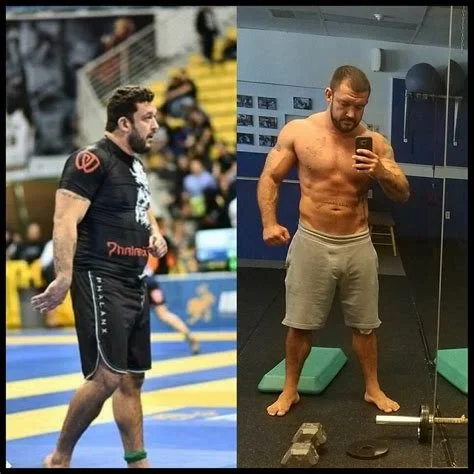
Martial arts can transform your life if you commit to it
And when they pay for it, even a small amount, they show up differently.
They have skin in the game.
They pay attention.
They take notes.
They ask questions.
They do the work.
Because they are playing with their own money now.
At the end of those 30 days, you point to a result.
A before and after.
"When you started, you could not do a forward roll. Now you can."
"When you started, you were winded after warmups. Now you finish the class."
"When you started, you did not know anyone here. Now you have training partners you look forward to seeing."
That is a conversation. That is retention.
That is how you build a gym full of people who stay.
What to Do Instead
Kill the free trial.
Replace it with a paid introductory program.
Call it something simple.
The 30-Day Foundations Program
The Beginner's Jumpstart
30 Days to a Better You
The name does not matter. The structure does.
Here is what it looks like:
A clear start and end date. Thirty days. Not an open-ended trial. Not "come whenever you want." A defined window with a defined goal.
A specific result you can point to. Not "learn some martial arts." Something concrete. By the end of this program, you will be able to perform basic footwork, breakfall safely, escape bad positions, and complete a full class without stopping. Name the result upfront so you can point to it at the end.
A price that asks for commitment. This does not need to be your full membership rate. But it needs to be enough that the person feels it. Enough that they think twice before skipping a class. Enough that they treat the program like an investment instead of a tryout.
A graduation moment. At the end of 30 days, you sit down with them. You review what they learned. You point to the result. And then you offer them the next step: full membership. The conversation is completely different from "so, did you like it?" The conversation is "here is what you achieved. Here is what comes next."
The wrong people leave fast. Some people will hear "paid program" and walk away. That is a feature, not a bug. The tire-kickers are gone before they ever walk through your door. The comparison shoppers move on to the next free trial. The people who stay are the ones who were serious enough to invest in themselves. Those are the students who become your best members. Those are the students who bring their friends.
A free trial makes you feel busy. People coming through the door. Classes looking full. The owner feeling like something is happening.
But busy is not the same as building.
The gym down the street with 50 free trial students this month is going to have five of them next month.
You with 10 paid starter program students this month are going to have eight of them next month, and they are going to bring two more.
The math is not complicated.
The math just requires you to stop playing with someone else's money and start asking people to invest in themselves.
The students worth keeping are the ones willing to pay with their own dollars.